ESG 360 Case Study:
Motor Claims Fulfilment
I worked with this client’s CEO in previous roles, so there was already a shared understanding of the challenge — not just what good looks like, but what actually works in practice.
The client wanted to introduce an ESG programme that was genuinely tailored to the demands of the network — not something imposed on it.
Working alongside Tim at Green Business, we developed a tailored variation of our ESG360 programme, called Sustain 360, covering Environmental, Social and Governance through a claims and supply chain lens.
This work started with a simple recognition.
In high-paced, customer-facing environments — like vehicle recycling and claims fulfilment — ESG doesn’t struggle because people don’t care. It struggles because prioritising action alongside everything else is genuinely hard.
The reality we were working in
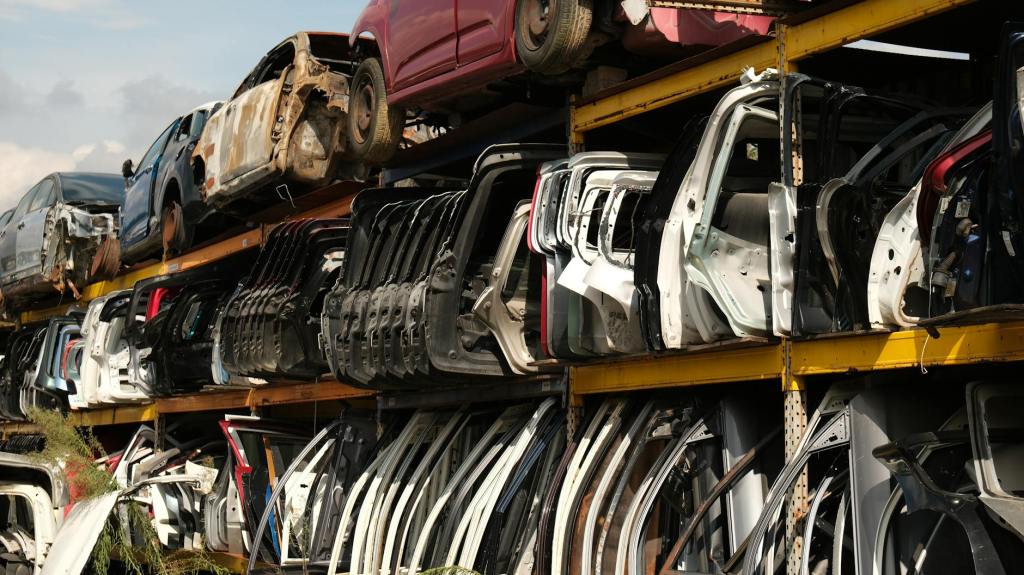
The client operates a national network of vehicle recycling centres — a mix of large operators and smaller, local businesses, all delivering critical, hands-on work.
That diversity is a strength — but it also means:
- very different starting points
- different levels of capability and resource
- and very real operational pressures
Any ESG approach had to reflect that.
How we approached it
From the outset, the focus wasn’t to introduce a framework.
It was to build something that:
- people could actually use
- worked alongside day-to-day operations
- and built confidence at both executive and member level
Over time, Sustain 360 has evolved into a structured but practical programme, including:
- Annual ESG data capture across Environmental, Social and Governance
- Carbon footprint development — now including Scope 3 emissions
- Quantified social value aligned to real activity across the network
- Governance self-assessment, strengthening transparency and consistency
- Ongoing support to help members build capability and improve over time
Structured enough to be credible. Simple enough to work in practice
What’s changed (Year 4)
Four years in, the difference is clear.
- A full carbon footprint is in place, including Scope 3
- Reductions are being seen in key areas of emissions, alongside improving data quality
- Social value continues to increase, driven by employment, skills, community support and charitable activity
- Governance is more transparent and robust, with clearer evidence for clients and stakeholders
- Engagement across the network has grown — with members at very different starting points now moving forward
Why this matters
ESG is embedded in how work gets done.
- Behind the data is a network of real businesses.
- People running recycling centres.
- Employing local teams.
- Supporting their communities.
The impact for the business
- Greater confidence in responding to insurer ESG requirements
- Stronger, more consistent evidence across the network
- A more engaged and capable supply chain
- Clear progress year-on-year, rather than one-off activity
This creates a more resilient, transparent and credible supply chain — for both the client and its insurer partners. This work spans a national network of recycling centres, with a wide range of business types and levels of ESG maturity.
That’s what makes it work — it’s designed for reality, not theory.
For me, this is what good looks like. Steady, measurable progress — built on clear intent, practical action and evidence that stands up in the real world.
Page 3: Deep Dive | Focused Insights & Delivery
 Helm 360 Consult Ltd